
Tameshigiri
Types of test cutting
- Yondan-giri (四段斬り) · Four Cuts
- Godan-giri (五段斬り) · Five Cuts
- Rokudan-giri (六段斬り) · Six Cuts
- Tsubame-gaeshi (燕返し) · Swallow Return
- Inazuma (稲妻) · Lightning
- Gyaku-inazuma (逆稲妻) · Reverse Lightning
- Nami-gaeshi (波返し) · Wave Return
- Mizu-gaeshi (水返し) · Water Return
- Kawasemi (川蝉) · Kingfisher
- Suisha (水車) · Water Wheel
- Kazaguruma (風車) · Windmill
- Tatami (畳) · Tatami Mat
- Makuri (まくり) · Rolling Cut
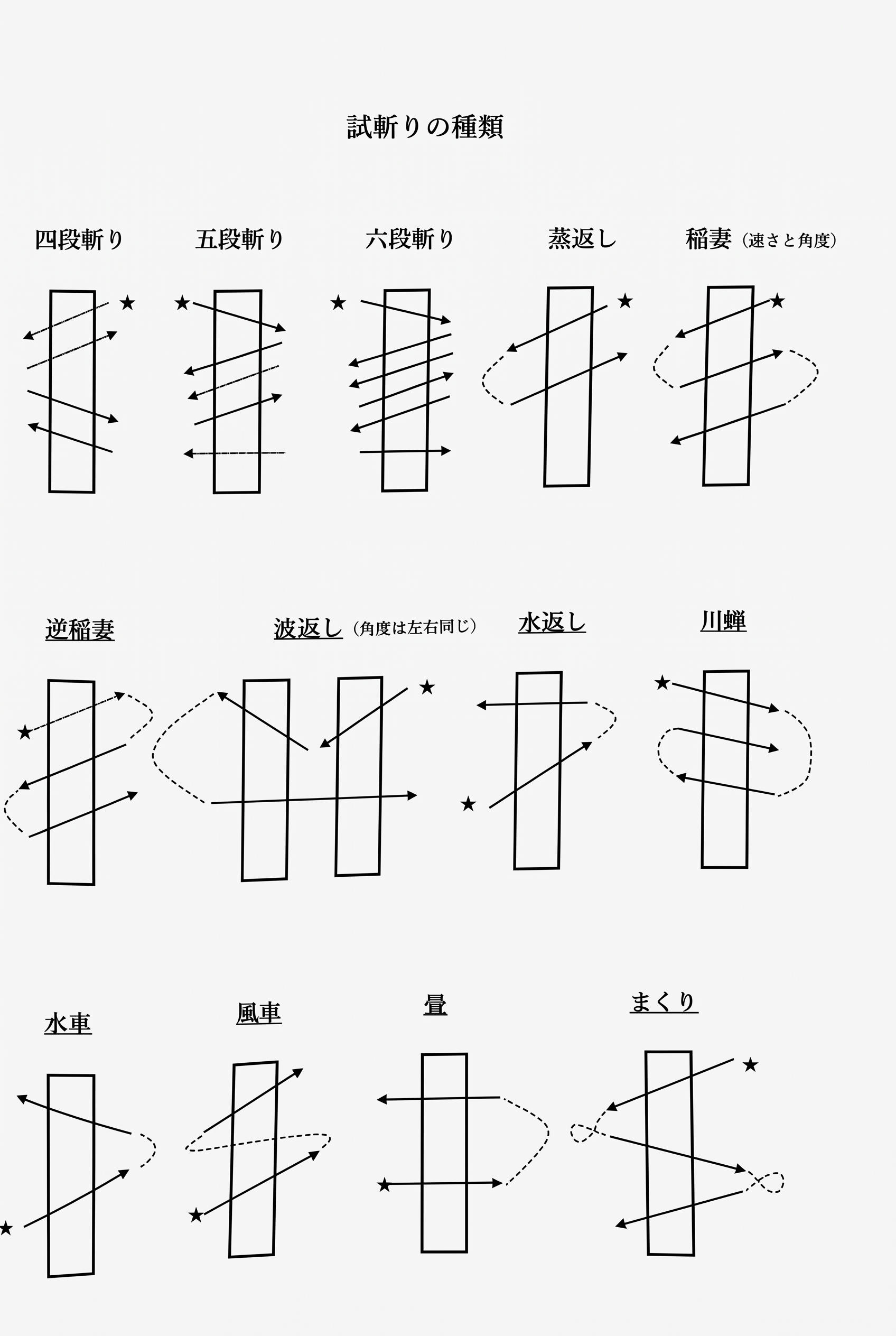
Tameshigiri (試斬り, test cutting) is the part of the Zen Nihon Battōdō Renmei syllabus assessed on prepared wara targets. In competition, judges consider the result on the target, the steadiness of the stand and the competitor’s conduct throughout the attempt.
Federation events
Each numbered event has a starting score. The named examples below are grouped by event number. Judges apply the deductions separately.
Individual cut scores
The individual draw-cut category (抜打斬り) awards 20 points for a horizontal cut, 10 for a descending diagonal and 15 for a rising diagonal.
Starting scores by event
No. 1 · 50 points · Rokudan-giri (六段斬り)
No. 2 · 60 points · Tsubame-gaeshi (燕返し)
No. 3 · 80 points · Inazuma (稲妻), Daruma-otoshi (達磨落とし)
No. 4 · 100 points · Mizu-gaeshi (水返し)
No. 5 · 120 points · Nami-gaeshi (波返し), Suisha (水車), Tonbo (蜻蛉), Kawasemi (翡翠), Raimei (雷鳴)
No. 6 · 140 points · Kazaguruma (風車), Kasumi (霞), 後水返し
No. 7 · 160 points · Tsumujikaze (旋風)
No. 8 · 180 points · Rakurai (落雷)
No. 9 · Ukigumo (浮雲). The score is blank in this edition’s table.
Deductions and disqualification
Judges deduct points for faults in the cut or movement of the stand. Knocking over the stand, striking the floor, missing the target, performing the wrong number of cuts, changing their prescribed order or acting dangerously results in disqualification.
What the judges look for
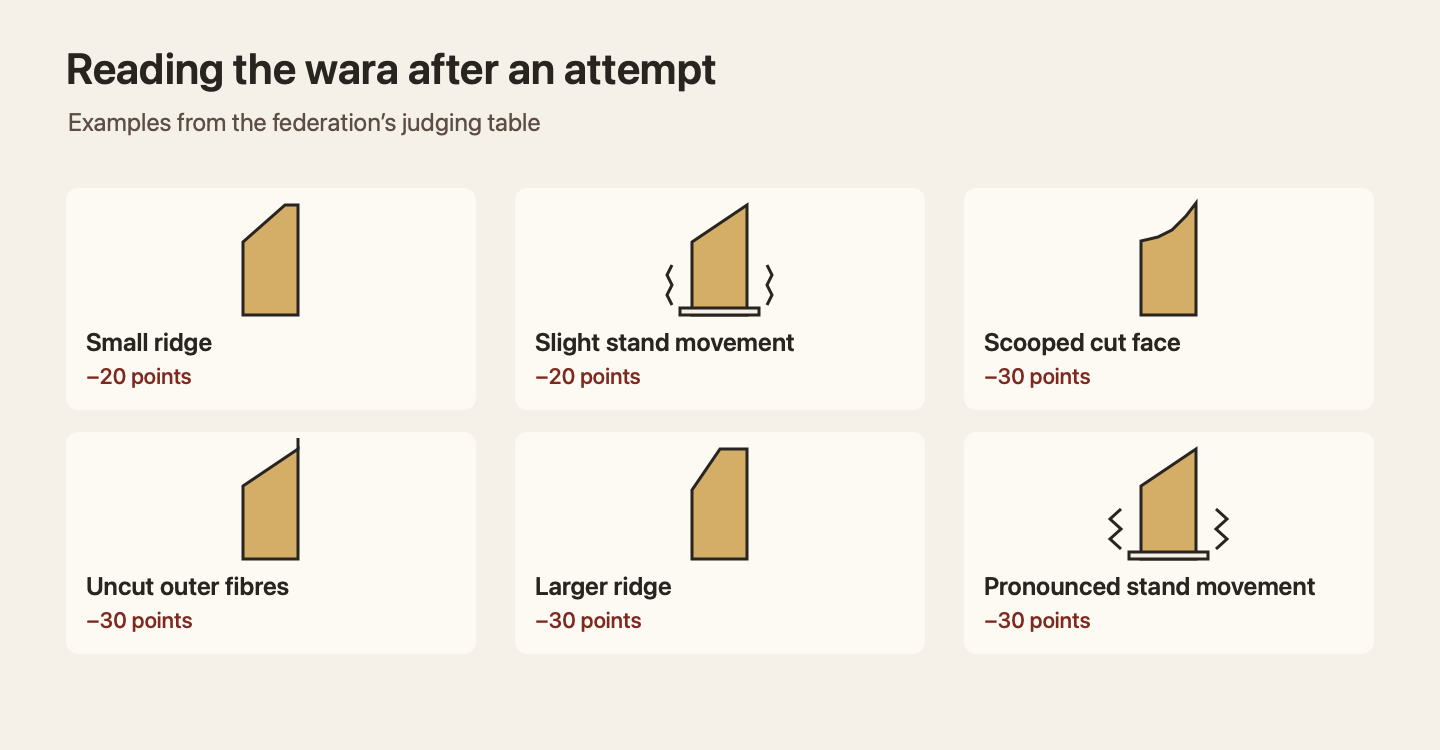
A small ridge on the cut face or slight stand movement costs 20 points. A larger ridge, a scooped cut face, uncut outer fibres or pronounced stand movement costs 30 points.
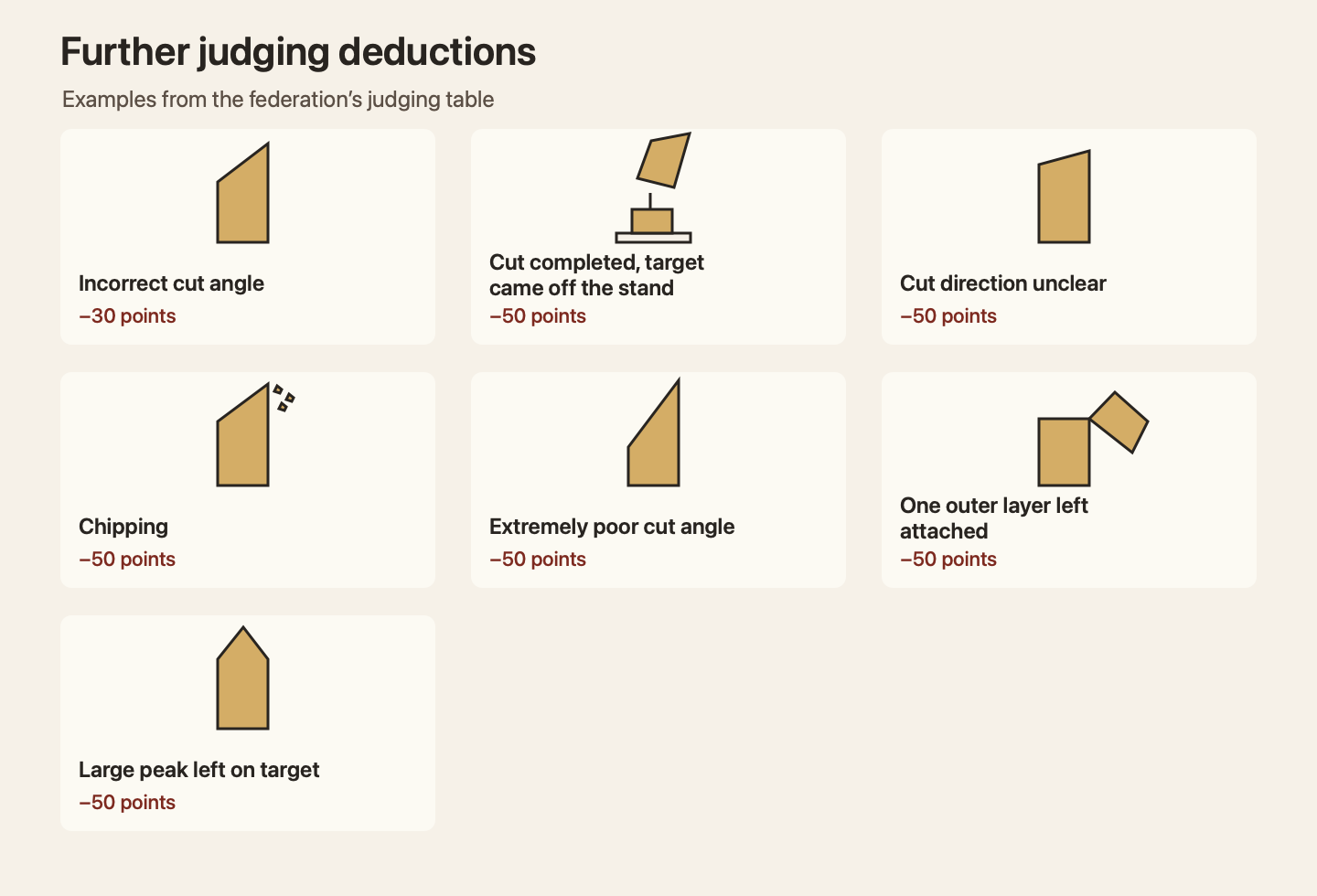
An incorrect cut angle costs 30 points. Deduct 50 points for an extremely poor angle, a cut that cannot be identified as horizontal or diagonal, a target that comes off the stand after the cut, chipping, one outer layer left attached or a large peak left on the target.
Source: All Japan Battōdō Federation Kata Handbook (全日本抜刀道連盟形教本), Instruction Department, second edition, April 2018.